Airbnb 2026 Travel Trends: What Short-Term Rental Owners Should Do Now
 Kate Stoermer
Airbnb’s 2026 travel trends decoded for short-term rental owners, plus a real national park STR case study.
What We’ll Cover
Airbnb released its 2026 Travel Predictions, and buried inside the headlines are very real signals for short-term rental owners and investors.
In this post, we’ll break down Airbnb's report to cover:
-
The biggest travel trends shaping 2026 bookings
-
What these trends actually mean for STR owners
-
How to position (or reposition) a property to match demand
-
A real client case study near Acadia National Park showing how travel trends, operations, and tax strategy can work together
If you know me, then you know I'm not someone who buys into trends. But this isn't about the latest exercise fad.
It’s about making better buying, operating, and tax decisions as short-term rental owners and investors.
Airbnb’s 2026 Travel Trends — The Big Picture
According to Airbnb, 2026 travel is being shaped by three dominant forces:
-
Experience-driven travel (events, culture, nature)
-
Shorter, more intentional trips
-
Demand clustering around specific moments and locations
For STR owners, this means demand isn’t disappearing — it’s becoming more concentrated and more predictable if you know where to look.
Let’s unpack the trends that matter most.
Trend #1: National Parks & Outdoor Escapes Are Surging

Airbnb reports a 35% increase in searches for stays near national parks, with outdoor experiences outperforming every other experience category.
Travelers aren’t just looking for a place to sleep — they want:
-
Proximity to nature
-
Slower mornings, quieter nights
-
A sense of escape that still feels intentional
What This Means for STR Owners
If your property is:
-
Near a national park
-
Close to hiking, water, or protected land
-
In a “drive-to” leisure market
Then you aprobably lready know this is an STR with steady demand.
Actionable steps to ensure you leverage that desirabilty:
-
Highlight distance to parks clearly in your listing
-
Optimize photos around outdoor access and calm
-
Lean into shoulder seasons (fall foliage, spring hiking)
-
Adjust pricing around peak park months instead of flat yearly rates
This trend also pairs well with STRs that double as lifestyle investments, which brings us to a real-world example.
Case Study: Leveraging National Park Demand + STR Tax Strategy (Acadia, Maine)
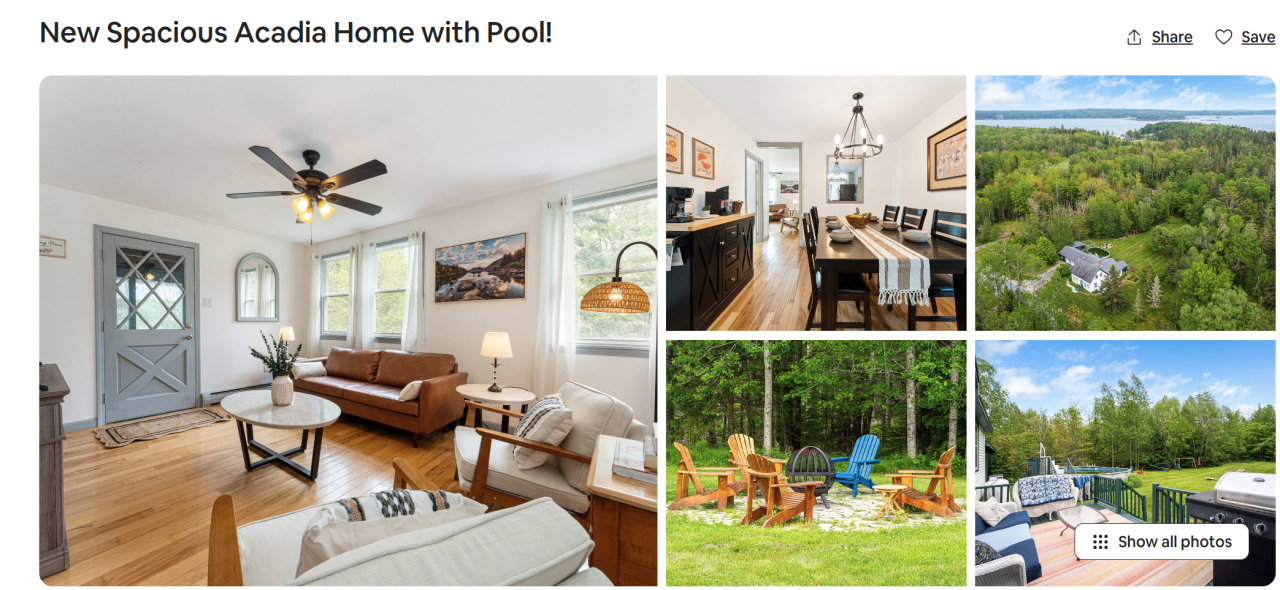
One of my clients leaned directly into this trend in 2025 by purchasing a short-term rental near Acadia National Park.
The Setup
-
The property was an established STR, sold turn-key
-
Operationally sound — but dated décor and positioning
-
Strong and highly seasonal demand due to proximity to Acadia
HIstory of mid-term renting in off-season
Rather than outsourcing everything, my clients made a strategic choice.
The Strategy
They uprooted and spent two full weeks living at the property, personally handling:
-
Design refresh and furnishing updates
-
Guest experience improvements
-
Operational fine-tuning before launch
The property ultimately launched with a property manager, but:
-
Much of the heavy lifting happened before launch
-
Their personal involvement was intentional and documented
Mid-term stays were limited this first year to ensure the property stayed within the IRS definition of STR (average of 7 or less day stays)
Why This Matters (Operational + Tax)
Narrowed in on market in Feb | March and closed on a property in May
-
It took about two months from closing to first booking
-
The property launched in high-season into a high-demand outdoor market
-
Even with a PM, my clients materially participated in 2025:
-
Their tracked hours exceeded the PM and vendors
-
They qualified for the short-term rental tax loophole
-
-
A cost segregation study amplified first-year depreciation
The result?
A substantial paper loss that meaningfully reduced their 2025 tax liability — and once live, the property nearly paid for itself.
This wasn’t luck.
It was aligning:
-
Travel demand
-
Owner involvement
-
And tax strategy
📌 This is exactly the kind of scenario I break down step-by-step in the Tax Playbook — not theory, but how these strategies actually show up in real STR businesses.
👉 Grab the Tax Playbook if you want to understand when material participation, cost segregation, and bonus depreciation do (and don’t) make sense.
Trend #2: Event-Driven “Mainstage” Travel Is Accelerating
Airbnb’s data shows that over 65% of peak travel dates in 2026 align with major events — music festivals, global sporting events, and cultural moments.
This creates:
-
Compressed booking windows
-
Extreme pricing pressure
-
Very little room for operational mistakes
What STR Owners Should Do
-
Lock pricing and minimum stays earlier than feels comfortable
-
Treat festival and event weeks as separate seasons
-
Avoid major changes (PM swaps, listing resets) during booking surges
Event-driven STRs are powerful — but they require precision.
👉 I’ll be publishing a separate client case study on navigating PM changes and exit decisions in a Coachella-adjacent market, which I’ll link here once live.
Trend #3: Shorter, Intentional Trips (Especially Younger Travelers)
Airbnb also notes a rise in short, high-impact trips, particularly among younger travelers:
-
1–3 night stays
-
Experience-first decision making
-
Less interest in “stuff,” more interest in access
How to Adapt
-
Reevaluate rigid minimum stays outside peak seasons
-
Make your listing very clear, quickly!
-
Why this location?
-
Why this experience?
-
-
Focus your copy on what guests can do, not just what the property has
What These Trends Mean for STR Investors
The common thread across Airbnb’s 2026 predictions isn’t chaos — it’s clarity.
Demand is concentrating around:
-
Nature
-
Events
-
Experiences
For STR owners, that means:
-
Market selection matters more than ever
-
Operational decisions affect tax outcomes
-
And “set it and forget it” is becoming risky
The hosts who will do best in 2026 are those who:
-
Understand why guests are traveling
-
Align operations with tax strategy
-
And plan before opportunities — or offers — appear
Final Thoughts: Turning Trends into Strategy
Travel trends don’t make money on their own.
Strategy does.
Whether you’re:
-
Buying near a national park
-
Repositioning an existing STR
-
Or evaluating how hands-on to be in year one
Understanding how travel demand, operations, and tax planning intersect is key.
👉 Next Step:
-
Download the Tax Playbook
Just Getting Started?
The advice I give folks is lean into learning. Podcasts, books, online content - get clarity about your goal and the path you believe suits you. Check out my Mentors From Afar for ideas of folks and resources I've leveraged in my own journey and grab my 30 page guide - and bonus analyzer spreadsheet to walk you through this process for only $5!!
🏡 Ready to start building your STR success story?
Watch the video, grab your roadmap, and take your first step toward owning a profitable short-term rental business — even if you're starting from scratch.
▶️ Watch the Video | 📚 Get the STR Roadmap | 📞 Book a Free Call
****
***
If you'd like to receive updates from The CEO Host, join our email list. No spam, just the occasional update to help your Short-term Rental business! Sign Up HERE
Find Me on FACEBOOK or Instagram or LinkedIn as @theceohost
*****

Hey Boss! I'm Kate, owner/founder of The CEO Host. If you are interested in taking a leap into short-term rentals - or have some questions about your existing business, my goal - passion, and career, is to help YOU succeed. I've coached hundreds of folks getting started or looking to optimize, analyzed more deals (and duds) than I could count, completed thousands of hours of education and training, attended conferences... So don't be shy. A good CEO knows to bring in expert help - and that's what I'm here for! Lets HOP ON A CALL and chat
-
Or book a free call through www.theceohost.com
Categories: : industry trends