Why “No” Is the Most Profitable Decision a Short-Term Rental Owner Can Make
 Kate Stoermer
In short-term rentals, growth isn’t always about doing more. Learn why saying “no” can protect profits, focus, and long-term success.
What we’ll cover in this post
-
Why “no” is often the most underused tool in short-term rental investing
-
How clarity—not optimization—drives sustainable success
-
Why “good enough” is sometimes exactly right
-
The danger of crowd-sourcing decisions without context
-
How to make STR decisions based on your goals, not someone else’s playbook
The Most Important Work I Do Isn’t About Saying Yes
As a coach and consultant in the short-term rental space, I work with investors and operators who own anywhere from Zero to fifty or more. Some are just getting started. Others are scaling teams, portfolios, and management companies.
But the most important work I do with clients isn’t education, analysis, or optimization - although I do all 3 and more.
The most important work I do is helping clients say no.
That might sound counterintuitive in an industry obsessed with growth, scale, and “what’s next.” But over and over again, I see that the right “no” protects something far more valuable than revenue:
👉 Time
👉 Energy
👉 Focus
👉 Alignment with long-term goals
And often, saying no is the very thing that makes future yes's possible.
Let me give you a few real examples—details changed, but lessons intact.
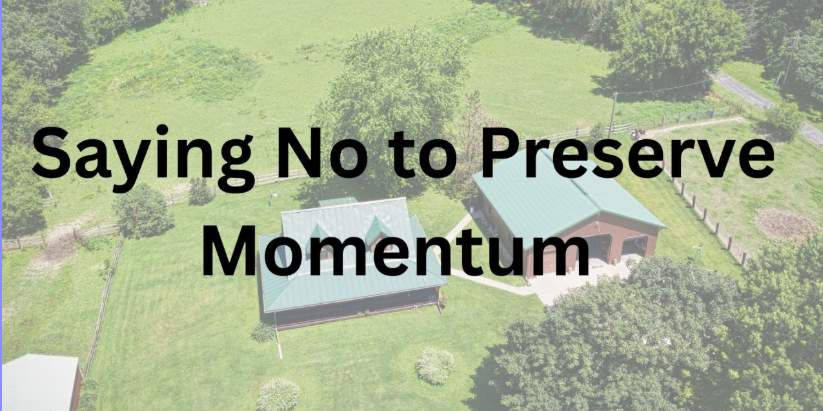
Case Study 1: When “No” Preserves Momentum (Instead of Killing It)
One client came to me excited about a new property opportunity. On paper, it looked good. The issue?
-
The property had acreage
-
It required hands-on care far beyond a cleaner and handyman
-
It was several hours from where he lived
-
And it didn’t align with his current season of life (ie, not able to pick up and stay at the property easily)
The easy answer—the one the internet would give—was “buy it.” - the numbers worked, he had a dream to someday own something like this.
But the right answer was no.
That no preserved his bandwidth so he could focus on stabilizing a property he already owned—and move forward in a way that was sustainable, not stressful.
That no didn’t slow him down.
It sped him up.
Case Study 2: When “No” Means You’re Already Doing Enough
In my opinion, we do a GREAT job of telling STR investors and owners about all the tools and software they "need" to be successful. This client - one of many who were similiarly plagued with a sense of "behind" due to not have a tech stack or revenue manager, was no more immune to that messaging than any one else.
Why? Because Facebook groups, podcasts, and Instagram told him he needed:
-
A more advanced tech stack
-
More platforms
-
More automation
-
More tools
But when we looked at his numbers, something became clear.
He was already happy with his results.
Revenue was solid.
Operations were smooth.
The business fit his life.
The right move wasn’t adding complexity.
The right move was giving himself permission to say no.
Sometimes the most profitable decision is not optimizing further—it’s recognizing that good enough is actually great.
Case Study 3: When “No” Becomes a Business Standard
For another client, “no” showed up in a different way.
They were building a boutique property management company. Opportunities kept coming in—different owners, different property types, different expectations. In fact, they said YES to everyone until it came clear "Yes" had a steep price he was no longer willing - or able, to pay.
For a young PM company, the lure of a big portfolio was real.
But growth without standards creates chaos.
We worked together - in just one hour, on creating standards.
Saying no allowed them to:
-
Define what types of homes they would manage
-
Set expectations for owner behavior
-
Protect their team’s capacity
-
Build a brand that actually stood for something
This kind of no isn’t reactive.
It’s strategic.
It didn't take much - he booked an hour consult with me once. We've kept in touch; he's making far more with fewer properties and doing very well. This is what a strategic "No" nets.
Case Study 4: When “No” Protects the Original Goal
One client received an unexpected offer to purchase a property they owned. On the surface, it could have been ideal. Their PM was not up to par, the property wasn't yet performing up to expectation. It would have been easy to take the money and run.
But when we zoomed out and revisited the original goal—the reason the property was purchased in the first place—the answer became clear.
Selling would derail the plan.
Saying no allowed them to:
-
Hold the asset longer
-
Continue leveraging its performance
-
Stay aligned with the bigger picture
Not every good offer deserves a yes. I had no idea what they WOULD do when she emailed in advance of our monthly session to say that was what we needed to talk about. My only job was to be a mirror, ask the right questions, and hold space for them to anwser. Sometimes the orginal goal needs to change; sometimes it still serves. The key is to hold space to ask that question.
****
The Real Work: Holding Space for the Right Answer
In every one of these situations, my role wasn’t to make the decision for the client.
It was to:
-
Hold space
-
Ask better questions
-
Reflect back what I could already see
Often, clients already know the answer.
They just need permission to choose their answer—not the one the industry applauds.
Why “Good Enough” Is a Radical Idea in STRs
Short-term rentals are loud. (Right?!) Folks who are new often comment it's like a firehose. Discerning who to listen to and what is real vs not can be challenging.
Why? Because everyone (me included!) has:
-
An opinion
-
A framework
-
A strategy that “worked for them”
And while crowd-sourcing can provide information, it rarely provides direction.
Because direction requires context:
-
Your financial goals
-
Your risk tolerance
-
Your time availability
-
Your season of life
-
Your definition of success
What’s “right” for someone with ten properties and a full team may be completely wrong for someone with one self-managed STR.
And that’s okay.
The Problem with Generic Advice
Facebook groups and Reddits are great for:
-
Learning terminology
-
Understanding what’s possible
-
Spotting trends
They are not great for:
-
Personalized decision-making
-
Strategic alignment
-
Nuanced tradeoffs
When you crowd-source decisions without grounding them in your own goals, you risk:
-
Adding complexity you don’t need
-
Chasing metrics that don’t matter
-
Building a business you didn’t actually want
The loudest advice isn’t always the best advice.
Better Questions Lead to Better Decisions
Instead of asking:
-
“What would others do?”
Try asking:
-
“What am I actually optimizing for right now?”
-
“Does this move serve my next 12–24 months?”
-
“What does this cost me in time, not just money?”
Clarity makes “no” easier.
And easier no’s make better yeses possible.
If You’re Early: Start With Clarity, Not Comparison
If you’re just getting started, this matters even more.
Before you worry about tools, tech, and markets, you need clarity on:
-
Why you’re doing this
-
What success looks like for you
-
What you’re willing (and not willing) to trade
You can book an hour with me any time if you just want to bounce ideas and get clarity with someone.
Final Thoughts: The Quiet Power of No
Saying no doesn’t mean you’re playing small.
It often means you’re playing intentionally.
The most successful STR owners I know aren’t the ones doing everything.
They’re the ones doing the right things—at the right time—for the right reasons.
And sometimes, the most profitable move you can make is choosing not to make one at all.
In summary
-
“No” is a strategic tool, not a failure
-
Good enough is often exactly right
-
Your goals matter more than industry norms
-
Generic advice can inform—but shouldn’t decide
Find Me on FACEBOOK or Instagram or LinkedIn as @theceohost
*****

Hey Boss! I'm Kate, owner/founder of The CEO Host. If you are interested in taking a leap into short-term rentals - or have some questions about your existing business, my goal - passion, and career, is to help YOU succeed. I've coached hundreds of folks getting started or looking to optimize, analyzed more deals (and duds) than I could count, completed thousands of hours of education and training, attended conferences... So don't be shy. A good CEO knows to bring in expert help - and that's what I'm here for! Lets HOP ON A CALL and chat